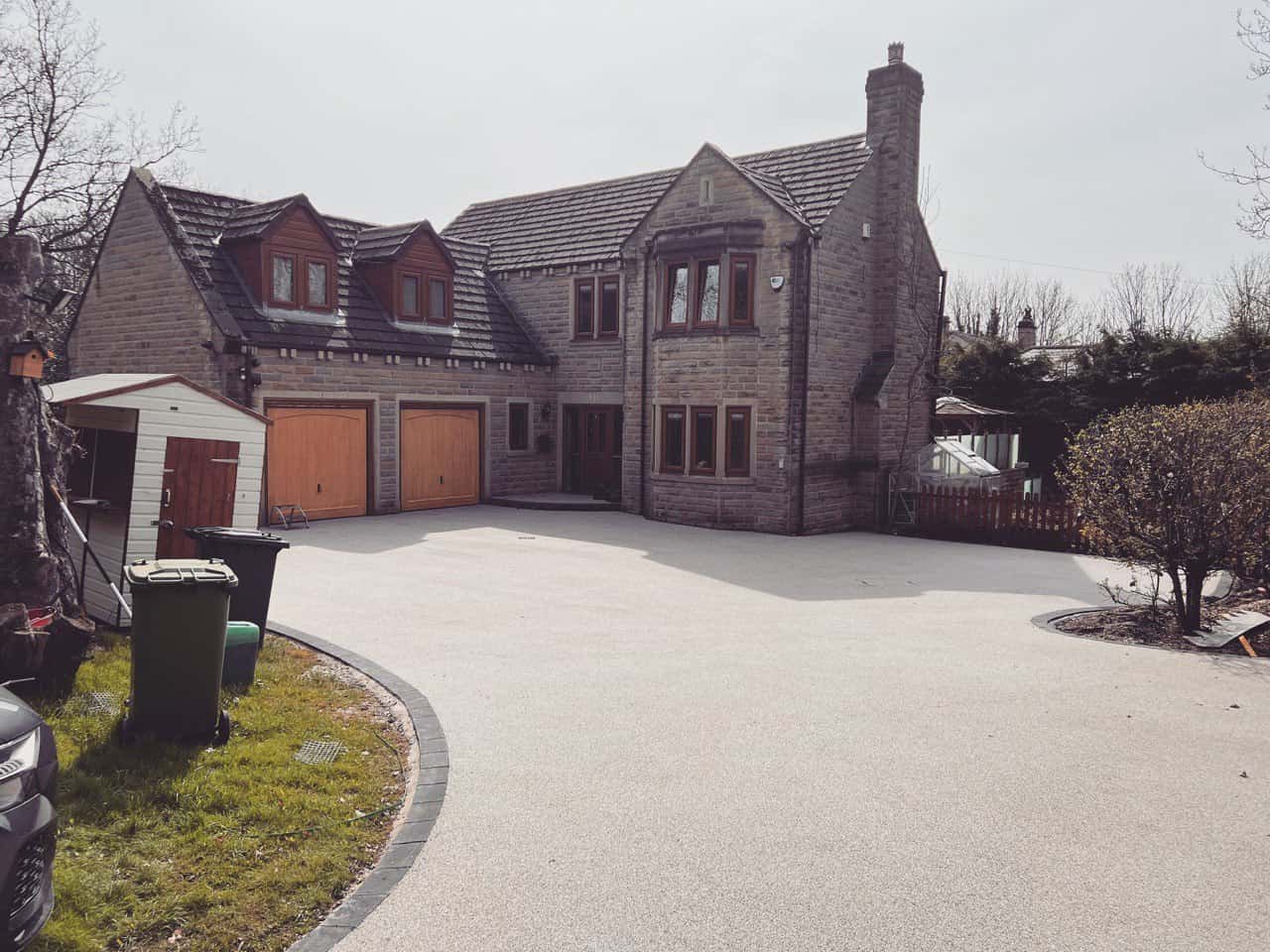
A well-designed patio can become one of the most frequently used parts of a garden. It can provide a practical setting for outdoor seating, dining, entertaining and everyday relaxation while creating a stronger connection between the house and the surrounding outdoor space. Choosing the right surface is therefore about much more than appearance alone.
Resin bound surfacing has become a practical option for patios because it combines a smooth finish with durability, permeability and considerable design flexibility. The surface is created by thoroughly mixing selected aggregates with resin before the material is laid and finished to form a consistent, bound surface.
For homeowners in Birmingham, West Midlands, a resin bound patio can provide a contemporary and practical outdoor surface that works well for both everyday use and wider garden improvements. Its success, however, depends heavily on suitable preparation, drainage considerations and professional installation.
What Makes Resin Bound Surfacing Suitable for a Patio?
A patio needs to cope with regular foot traffic, outdoor furniture, changing weather conditions and everyday garden use. At the same time, it should complement the property and provide a comfortable surface that people actually want to use.
Resin bound surfacing combines decorative aggregate with a binding resin, creating a surface without the numerous individual joints associated with some other patio materials. This can produce a clean and consistent appearance across both compact and larger patio areas.
When installed over a suitable base with appropriate preparation, it can provide an effective surface for creating a functional outdoor living area.
A Smooth Surface Makes Everyday Use Comfortable
One of the most noticeable characteristics of resin bound surfacing is its relatively smooth, consistent finish.
A patio may be used for walking, moving chairs, positioning tables and carrying items between the house and garden. An even surface can make these everyday activities easier and more comfortable.
The aggregate remains visible within the finish, so the patio retains texture and visual character without relying on large joints between individual paving units.
Resin Bound Patios Create a Continuous Appearance
Traditional paving materials divide a patio into individual slabs or blocks.
Resin bound surfacing creates a much more continuous visual effect. This can be particularly useful where the objective is to create an uncluttered outdoor living area with a consistent finish.
The result can work well with both simple patio layouts and more detailed garden designs.
A Patio Can Feel More Connected to the Property
Good patio design should consider how people move between the house and garden.
A resin bound surface can create a defined outdoor living area immediately outside the property while providing a natural transition into surrounding garden features.
Careful planning of shape, edges and adjoining paths can help the patio feel like an integrated part of the property rather than a separate area added afterwards.
Resin Bound Surfacing Offers Design Flexibility
Patios are not always simple squares or rectangles.
Garden layouts may include curved borders, planting beds, steps, pathways and other features. Resin bound material can be installed within appropriately prepared boundaries to accommodate a variety of shapes.
This flexibility can be useful when designing a patio around an existing garden layout.
Different Aggregate Finishes Create Different Appearances
The appearance of a resin bound patio is largely influenced by the aggregate blend used within the surface.
Different combinations can produce lighter, darker, warmer or more understated finishes. This allows the patio to be selected with the surrounding property and garden in mind.
The objective should be to create a surface that complements its setting rather than choosing a finish independently from the wider landscape.
Defined Edges Help Complete the Patio
Edges play both a practical and visual role in resin bound installation.
A clearly defined perimeter helps establish the shape of the patio and provides an appropriate boundary for the surface. Edge details can also help create a deliberate transition between resin bound surfacing and lawns, planting areas or other garden features.
Good edging can make a significant difference to the finished appearance.
Resin Bound Patios Can Complement Garden Paths
Where a garden requires both a patio and pedestrian paths, resin bound surfacing can create visual continuity between them.
A path can extend from the main patio towards another part of the garden without introducing an entirely different surface. This can make the overall layout feel more coordinated.
Alternatively, contrasting edges or carefully chosen finishes can be used to distinguish different areas.
Permeability Is an Important Characteristic
A correctly specified resin bound surface contains interconnected voids between the aggregate particles.
These spaces can allow water to pass through the surface rather than simply remaining on top. However, the performance of the complete installation also depends on what lies beneath the resin bound layer.
A permeable surface should therefore be considered as part of a complete construction rather than in isolation.
The Base Has a Major Influence on Patio Performance
The attractive resin bound finish is only the upper layer of the patio construction.
The condition, suitability and stability of the underlying base are extremely important. If the foundation beneath the surface is unsuitable or unstable, problems can eventually become visible above.
Professional installation therefore begins with assessing and preparing what will support the finished patio.
Surface Preparation Should Not Be Rushed
Successful resin bound installation depends on preparation.
The area needs to provide suitable levels, stability and an appropriate surface for the resin bound material. Existing conditions should be assessed rather than assuming that every old patio or hard surface can simply be covered.
Taking time over preparation helps create a better foundation for the finished result.
Existing Patios Need Individual Assessment
Some homeowners consider resin bound surfacing as part of an improvement to an existing patio.
Whether an existing surface can form part of the new installation depends on its condition and suitability. Cracking, movement, poor levels or other defects should not simply be hidden beneath a new finish.
The underlying cause of any deterioration should be understood before deciding how the area should be prepared.
Drainage Should Be Considered From the Beginning
Water management is an important part of any outdoor surfacing project.
Although resin bound material can provide permeability when correctly specified, the wider patio construction and surrounding ground still need consideration. Levels, adjoining surfaces and the underlying build-up can all influence how water behaves.
Drainage should therefore be part of the planning stage rather than something considered only after the patio has been installed.
Correct Levels Help the Patio Work With Its Surroundings
A patio needs to relate appropriately to surrounding garden levels and nearby features.
Poorly considered levels can create awkward transitions or influence how surface water moves around the area. This becomes particularly important where the patio connects with paths or other hard landscaping.
Careful preparation allows the finished resin bound surface to sit appropriately within the wider garden.
Resin Bound Surfacing Works Well for Outdoor Seating Areas
Patios often need to accommodate tables, chairs and other garden furniture.
A consistent surface provides a practical base for arranging these items without numerous deep joints or substantial variations between individual paving units.
This can make the patio more convenient for everyday outdoor living.
It Can Work Well for Dining Areas
Outdoor dining areas benefit from a surface that is easy to move around on.
A resin bound patio can provide a defined, even area where furniture can be arranged according to the available space. Larger patios can also be planned to accommodate different zones for dining and general seating.
The surface itself becomes the practical foundation for how the space is used.
A Resin Bound Patio Can Suit Smaller Gardens
A continuous finish can be particularly useful where outdoor space is limited.
Numerous changes of material or heavily divided surfaces can sometimes make a compact garden appear visually busy. A consistent resin bound patio can provide a cleaner appearance while still allowing borders and planting to add character.
Careful layout is particularly important when every part of the garden needs to serve a useful purpose.
Larger Patios Can Be Divided Into Functional Areas
A larger outdoor space does not necessarily need to function as one single seating area.
The patio layout can be planned around different activities, with areas for dining, furniture or general movement. Borders and adjoining landscaping can help define these zones without necessarily changing the primary surface.
This provides flexibility in how the garden is used.
Curved Patio Designs Are Possible
Not every garden benefits from straight lines.
Where appropriate edging and preparation are provided, resin bound surfacing can accommodate curved shapes. This can help the patio follow planting areas or other landscape features more naturally.
The ability to work with different layouts is one of the practical advantages of a poured and finished surface.
Resin Bound Surfacing Can Modernise a Tired Outdoor Area
An ageing patio can affect the appearance of the wider garden.
Uneven surfaces, extensive joints or a layout that no longer suits how the space is used may make the area feel less inviting. A properly planned resin bound patio can create a cleaner and more coherent outdoor living area.
However, any existing defects underneath should be dealt with rather than simply covered.
A Consistent Surface Can Simplify Routine Cleaning
Outdoor patios naturally collect dust, leaves and general garden debris.
The relatively continuous finish of resin bound surfacing means there are fewer large joints where loose material can gather compared with some segmented surfaces. Routine sweeping can therefore be straightforward.
Appropriate cleaning should still form part of normal maintenance when required.
Weed Growth Is Different From Jointed Paving
Because resin bound surfacing forms a continuous bound layer, it does not contain the same pattern of sand-filled joints found in some forms of block paving.
This removes many of the conventional joints where weeds can become noticeable. However, no outdoor surface should be described as completely incapable of developing unwanted growth, particularly where organic material is allowed to accumulate.
Regular basic maintenance remains worthwhile.
The Surface Can Retain a Natural Aggregate Appearance
Although resin bound patios often have a contemporary character, the visible aggregate can help them retain a natural appearance.
Individual stones remain clearly visible within the resin, creating variation and texture across the finished surface. This can allow the patio to work comfortably alongside lawns and planted areas.
Choosing an appropriate aggregate blend is therefore an important design decision.
Resin Bound Patios Do Not Need to Look Overly Decorative
A patio does not need complicated patterns to have visual interest.
A carefully selected aggregate and well-defined layout can provide a simple, understated finish. In many gardens, this allows planting, furniture and other features to remain the main visual focus.
Good patio design often comes from combining practical simplicity with appropriate detailing.
Borders Can Add Definition Without Overcomplicating the Design
Where additional visual definition is wanted, borders can be incorporated around the resin bound area.
These can help emphasise the shape of the patio or distinguish it from adjoining landscaping. Borders should be selected as part of the overall design rather than added simply for decoration.
A restrained approach can often produce the most coherent result.
Patio and Path Designs Can Be Planned Together
If a garden improvement involves more than the main seating area, it can be useful to consider all hard surfaces at the same time.
A resin bound patio can connect with paths leading through the garden, creating consistent pedestrian routes. Planning these elements together can improve both appearance and practical movement.
This also allows levels and edges to be coordinated across the project.
Good Installation Depends on Suitable Weather Conditions
Resin bound surfacing requires controlled installation.
The materials need to be correctly prepared, mixed and applied under suitable conditions. The process should not be treated like simply spreading loose decorative stone across an existing area.
Professional installation helps ensure that the finished surface is consistent across the patio.
Mixing the Resin and Aggregate Correctly Matters
The appearance of the finished patio depends partly on consistent mixing.
The selected aggregate needs to be thoroughly combined with the resin so that the stones are properly coated before installation. Inconsistent preparation can affect both appearance and performance.
Attention to the installation process is therefore just as important as choosing the aggregate.
Skilled Finishing Creates the Final Surface
Once mixed, the resin bound material needs to be laid and finished appropriately.
Achieving a consistent surface requires care throughout installation. Levels, edges and transitions need to be considered while the material is being applied.
This is one reason professional installation adds value beyond simply supplying the surfacing materials.
Resin Bound Surfacing Should Be Considered as a Complete System
The visible finish is only one element of a successful patio.
Base preparation, drainage, levels, edge restraints, material specification and installation all contribute to the completed surface. Focusing only on the appearance of the aggregate can overlook these important practical details.
A well-planned project considers the complete construction from the ground upwards.
Professional Assessment Helps Determine the Right Preparation
Every garden starts with different conditions.
Some areas may already contain hard surfacing, while others may require more extensive groundwork. Existing levels, stability and the intended patio layout all influence the preparation required.
Assessing these factors before installation helps ensure the proposed construction suits the individual property.
Why Professional Resin Bound Patio Installation Adds Value
A high-quality resin bound patio depends on much more than selecting an attractive aggregate. The supporting base, levels, drainage considerations, edging and installation process all need to work together.
At Birmingham Resin Driveways, we assess the intended patio area and consider the preparation required before the resin bound surface is installed. The aim is to create a practical outdoor area that complements the property while being suited to regular garden use.
For properties in Birmingham, West Midlands, this considered approach can help turn an underused or tired area into a more functional outdoor living space without introducing unnecessary complexity.
A Patio Should Be Designed Around How You Use the Garden
The most successful patio is not necessarily the largest or most elaborate.
Its layout should reflect how the household intends to use the space. A compact seating area may be sufficient for one property, while another garden may benefit from a larger surface connecting dining, seating and pedestrian areas.
Planning around everyday use helps ensure the finished patio serves a practical purpose rather than simply improving appearance.
Conclusion
A resin bound patio can be an excellent choice for an outdoor living space because it combines a smooth, continuous finish with design flexibility, visible natural aggregate and practical everyday usability. It can work effectively for seating, dining and pedestrian areas while integrating with paths, lawns and surrounding garden features.
The quality of the finished patio, however, depends heavily on what happens beneath the surface. Appropriate base preparation, levels, drainage considerations, edging and professional installation are all important parts of creating a resin bound area that performs as intended.
If you are considering a new resin bound patio for your property in Birmingham, West Midlands, contact Birmingham Resin Driveways. We can assess your outdoor area and recommend an appropriate approach to preparation, layout and resin bound installation for a practical and well-finished patio.
Call us on: 0121 2709829
Click here to find out more about Birmingham Resin Driveways
Click here to complete our contact form and see how we can help with your driveway needs.